Flashcards, games, and simple melodies teach you to read sheet music step by step. The app hears your piano, guitar, violin, or voice, so you practice sight reading with real sound, not just taps. Loved by kids, students, teachers, and adult beginners well into their seventies.


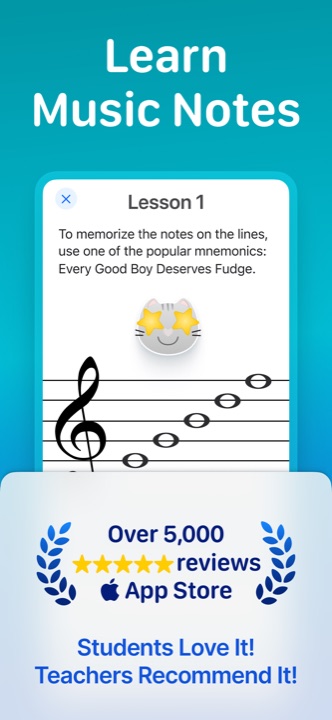
Short, focused exercises that make note reading feel like a game.
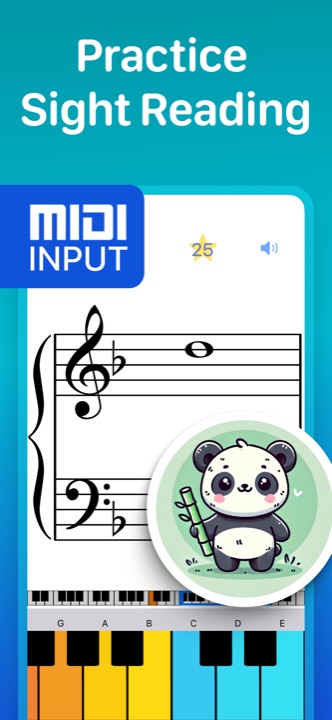
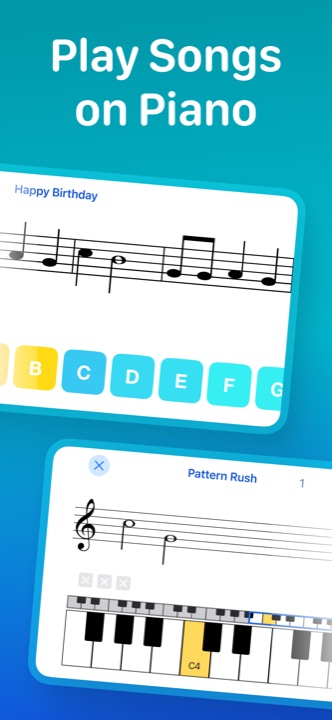
From zero to reading music in minutes a day, at your own pace.
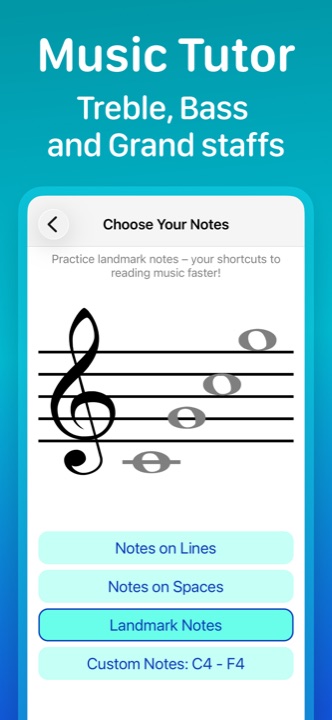
Choose treble, bass, or grand staff. Start with notes on lines, notes on spaces, or landmark notes, or set a custom range that matches what you are learning right now.
Tap the on-screen piano keyboard, or use note-name buttons labeled in your system (A B C, Do Re Mi, or A H C) to learn the names themselves, not just key positions. Or play your real piano, guitar, violin, or harp into the microphone, sing the note, or connect a MIDI keyboard.
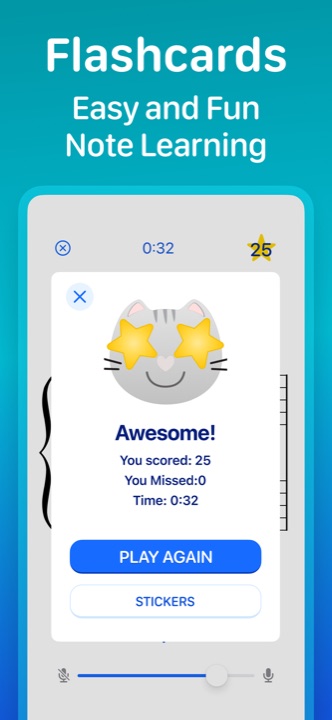
Five ways to play: Flashcards for no-pressure learning, Time Quest against the clock, Score Quest to reach a goal, Accuracy Challenge where wrong answers cost points, and Patterns Rush for multi-note patterns. Flashcards can even deal 2 and 3 note runs cut from real melodies. Stuck? Swipe or tap Reveal.
Session summaries and per-note stats show exactly which notes need more work. Set daily goals, get practice reminders, and collect stickers as you improve.
Practical, accurate answers to the questions every music learner asks, with a way to practice each skill in the app.
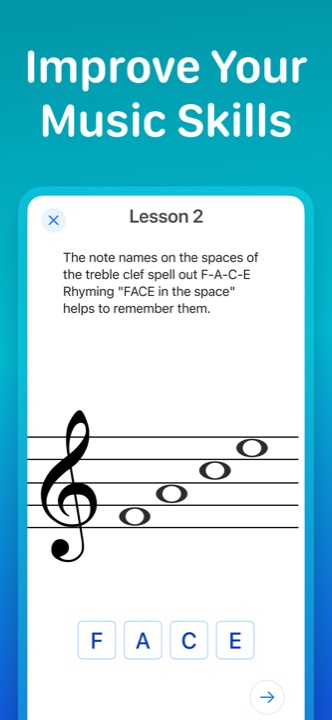
The staff, the clefs, and the note names explained from zero, plus a daily routine that makes them stick.
Read the guide →Every Good Boy Deserves Fudge, FACE, ledger lines, and faster tricks like landmark notes.
Read the guide →The left-hand clef most learners find harder, made simple with mnemonics and drills.
Read the guide →Why the same line means a different note in each, and where they meet.
Read the guide →Why short daily drills beat long weekly sessions, and how to structure them.
Read the guide →Printable cards vs interactive flashcards with sound, scoring, and stats.
Read the guide →Find C, name every white key, and connect keys to the notes on the staff.
Read the guide →Game-based learning, stickers, and meaningful screen time for young musicians.
Read the guide →Reading treble and bass together, and why middle C is your anchor.
Read the guide →How mic pitch tracking and MIDI input turn any piano, guitar, or violin into your answer button.
Read the guide →A teacher's guide to focusing students with a few minutes of note drills at the start of class.
Read the guide →Letter names, solfege, the German H, and how to practice in the system you use.
Read the guide →Why stopping on every wrong note holds you back, and why perfect is not the goal.
Read the guide →Why your listeners want you to succeed, and how to prepare for a recital.
Read the guide →A Suzuki teacher's end-of-lesson sticker that still mattered to my daughter at 14.
Read the guide →Which activity to use when, why you keep going after a wrong note in a melody, and microphone tips.
Read the guide →Quick answers about reading music and about the app.
Join the students, parents, and teachers who have trusted Learn Music Notes Piano since 2017, with 4.5 stars from more than 7,700 App Store ratings worldwide. A few playful minutes at a time is all it takes.